
Children’s areas in libraries are no longer just rows of bookshelves, they’re becoming immersive environments that support early literacy, social-emotional development, and community connection. Designing a play zone in your library isn’t just about aesthetics. It’s about creating a space where children want to be, and where learning happens through joyful interaction.
Below is a practical guide for designing engaging library play areas, with real-world insights, design advice, and important considerations for public and private libraries.
1. Start with a Theme to Spark Imagination and Encourage Return Visits
Themes help transform ordinary spaces into narrative-rich environments. Research shows that themed environments stimulate imagination and encourage repeat engagement—especially important in early literacy development where repetition and exposure matter.
Tips for choosing a theme:
- Align it with your community identity (e.g., local animals, regional history, seasonal themes).
- Let kids become characters in the story—forest explorers, ocean divers, astronauts, etc.
- Rotate soft elements (like reading props or mural overlays) seasonally to keep the space fresh.
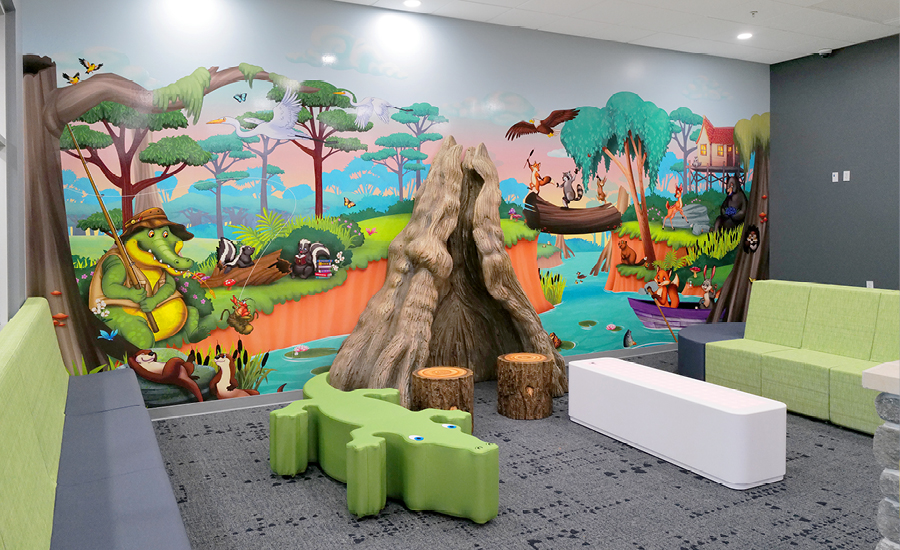
Popular, kid-approved themes:
- Woodland Forest – Encourages nature-based play and discovery. Think animals, trees, leaves, and hidden story corners.
- Under the Sea – Ocean life, coral reefs, submarines, and treasure maps. Great for sensory and exploration play.
- Outer Space & Astronomy – Planets, stars, rockets, and alien life forms. Encourages STEM tie-ins with curiosity and science.
- Storybook Land – Classic tales, fairytales, and fables brought to life. Bridges literacy with visual storytelling.
- Jungle Safari – Animal habitats, vines, explorer themes. Active and educational, with geography tie-ins.
- Arctic Adventure – Snowy landscapes, polar bears, igloos, and the aurora. Works well for calm, cool-toned spaces.
- Time Travel or Historical Eras – Castles, ancient ruins, dinosaurs, or pioneers—engaging for slightly older kids too.
- Transportation Station – Planes, trains, and automobiles. Fun for toddlers and connects to local infrastructure stories.
- Agriculture Theme – Barns, crops, tractors, animals, and farmers. Great for teaching where food comes from, rural storytelling, and celebrating local heritage.
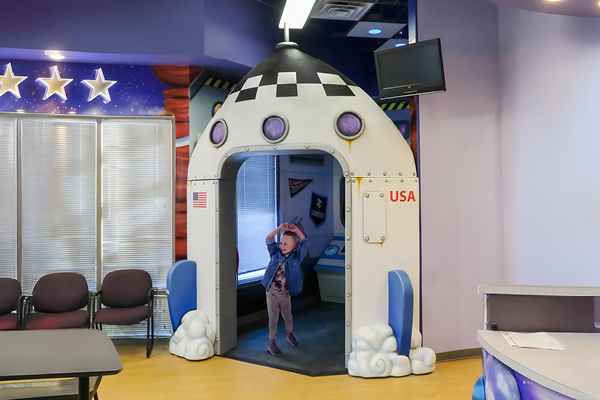
Why it works: Themes increase dwell time and enjoyment. According to a 2020 Library Journal survey, play zones with recognizable or imaginative themes saw up to 40% more use than undecorated areas of similar size.
EXPLORE THEMED LIBRARY DECOR
2. Design for Movement: Encourage Physical Play Alongside Reading
Literacy isn’t just built through reading, it’s also supported through physical play. Gross motor activities help with coordination and self-regulation, both of which are critical for attention and early learning.
Ideas to integrate physical activity:
- Crawl-through tunnels sculptures like books or hollow logs
- Slides for active play and adventure
- Soft play climbable structures shaped like bookworms or woodland animals
- Sculpted steps or platforms for hopping and balancing
- Kid-height nooks for climbing into and curling up with a book

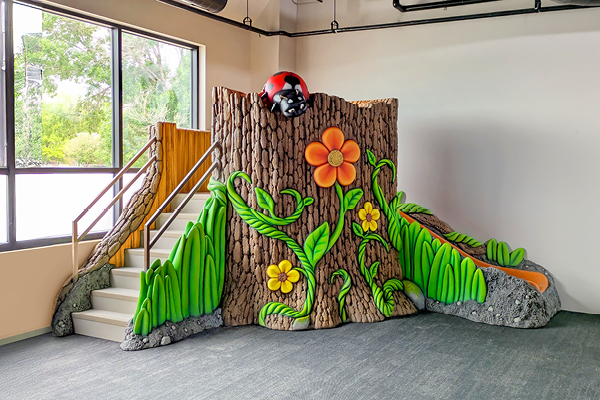
Design tip: Ensure that your sculpted pieces serve dual purposes, like a tree stump that’s also a seat, or a photo op that doubles as a hide-and-seek feature.
3. Incorporating Literacy-Based Play
Reinforce language development and pre-reading skills through integrated literacy elements.
Ideas:
- Alphabet steps or tiles
- Hidden rhyming words in murals
- “I Spy” games integrated into the decor
- Letter-shaped seating or word walls
Stat: The ALA highlights that environments promoting print awareness and storytelling can accelerate early literacy milestones by up to 12 months.

4. Balance Energy with Calm: Include Reading Nooks and Quiet Zones
Every child engages differently. Some are drawn to movement; others prefer calm, quiet places to recharge or focus.

Key components of cozy reading areas:
- Themed benches shaped like clouds, lily pads, or leaves
- Soft seating with easy-to-clean upholstery
- Tree-trunk book bins or bookshelf alcoves
- Soft lighting or natural daylight (avoid harsh fluorescents)
- Calming color palettes (earth tones, soft greens, muted blues)
Evidence: Studies from the American Library Association suggest that providing “layered learning zones” (a mix of active and quiet areas) increases engagement and reduces behavioral issues, especially in younger patrons.
5. Design for Shareability: Encourage Community Connection
Families love sharing memorable outings. A well-designed kids’ space can become a social media magnet, increasing visibility for your library.
Ways to increase shareability:
- Add a “selfie spot” or reading sculpture for family photos
- Incorporate your library’s name or logo into murals or props
- Use bold colors and whimsical shapes that pop in photos
- Create visual landmarks that children will recognize and want to return to
Why it matters: Community members who share photos help promote the library organically. A 2022 Pew Research Center study showed that 32% of parents discovered local children’s events and spaces through social media posts from friends or influencers.
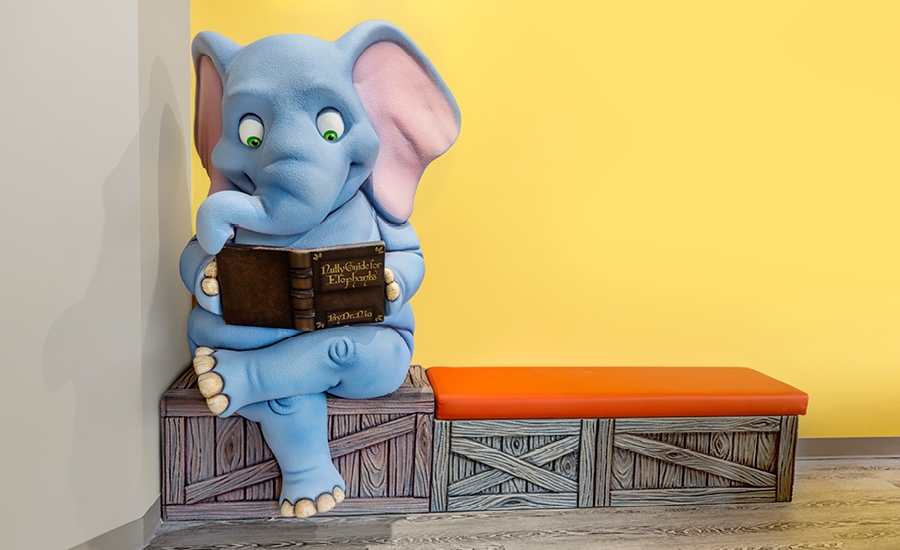
Marketing bonus: Include your library’s name on murals or props so it shows up in shared photos and community posts.
6. Designing for Multi-Age Use
Not all children’s areas serve toddlers only. Libraries often cater to a wide age range, from infants in storytime programs to tweens looking for a place to hang out.
What to include:
- Tiered seating or zones for different age groups
- Flexible furniture (e.g., movable beanbags, low benches, work tables)
- Age-appropriate signage and decor
- Dedicated “tween zones” with art tables, comic collections, or tech corners
Why it matters: Avoiding a one-size-fits-all design ensures the space remains useful and welcoming as children grow.
7. Design for Durability, Safety, and Easy Maintenance
Children’s play zones face heavy use, by sticky fingers, curious minds, and enthusiastic climbers. Materials and layout must be built to last, clean easily, and ensure safety.
What to look for in your materials:
- Rounded edges and smooth transitions to eliminate pinch points
- Non-toxic, hospital-grade coatings safe for kids and durable enough for disinfectants
- Slip-resistant flooring or integrated cushioned zones
- ADA-accessible routes and inclusive design
Maintenance tip: Use sealed surfaces wherever possible and avoid fabric unless it’s easily replaceable or wipeable.

Final Thoughts on Library Play Areas
A well-designed children’s library space is more than playful, it’s purposeful. It encourages exploration, builds early literacy skills, supports different learning styles, and enhances community visibility. Whether you’re working with a large budget or starting with a small corner, thoughtful design choices can create big impact.
IDS specializes in transforming kids’ library sections into spaces that excite young minds and serve your mission.
Let’s turn your library into a destination where stories come to life.
Ready to upgrade your library’s children’s area?
Visit IDSkids.com to explore themed play environments, request a quote, or browse real-world projects designed for public and private libraries.
- Written by Chris Bexiga, Lead Concept Designer at Imagination Design Studios
