One of the most effective ways to create a memorable care experience for children and families is through thoughtful hospital design and decor that transforms your space into a comforting, kid-friendly environment.
You might be asking:
- Why is design so important in a hospital setting?
- Which design elements actually improve patient experience?
- How do you choose the right theme or visual style for your facility?
These are exactly the questions this guide is here to answer.
Designing for pediatric hospitals goes far beyond adding cheerful colors or a few playful graphics. It’s about crafting an environment that supports healing, reduces anxiety, and feels safe and welcoming for kids. Most families won’t be able to assess the quality of medical care on their own, but they will absolutely remember how your hospital made them feel.
From waiting areas to treatment rooms and hallways, every design choice plays a role in building trust, comfort, and emotional ease. It all comes down to the environment you create, an atmosphere that reflects your hospital’s values and dedication to patient-centered care.
Let’s dive into how impactful pediatric hospital design can be, because every child deserves a space that feels hopeful, magical, and safe.

PURPOSE-DRIVEN MEDICAL DESIGN FOR CHILDREN’S SPACES
Great pediatric hospital design starts with intent. Every mural, sculpture, and interactive station should be chosen with a clear purpose – to comfort, engage, and reassure. It’s more than aesthetics; it’s a strategic extension of your care. Available services and top-notch medical skill alone don’t guarantee a positive experience if the environment around your patients feels cold or scary. Purpose-driven theming aligns your physical space with your hospital’s mission of compassionate, family-centered care.
Design Medical Decor with Goals in Mind
Consider what you want each visitor (child or adult) to feel and do at every step of their visit.

For example, calming nature artwork in exam rooms can lower a child’s heart rate, while an interactive game in the lobby can distract from waiting room jitters. A purposeful design plan also supports your operational goals – from patient satisfaction to staff efficiency.
In fact, fully themed hospitals often become the first choice for families in their community, turning a once-intimidating facility into a friendly, engaging space that kids actually look forward to visiting.
Engagement vs. Distraction: Designing with Purpose
In pediatric healthcare design, there’s a big difference between distraction and engagement, and understanding that difference can transform the patient experience.
Distraction is passive. It’s the TV playing in the background or a stack of outdated magazines. It fills time, but it doesn’t reduce anxiety in a meaningful way.
Engagement, on the other hand, is intentional. It invites kids to interact, explore, and feel some sense of control in an unfamiliar environment. It reduces stress by sparking curiosity, offering choices, and shifting their focus in a way that empowers rather than overwhelms.
At IDS Kids, we design with engagement in mind.
Key Outcomes of Purpose-Driven Design
By theming with clear objectives, you can achieve multiple benefits for patients and your organization:
- Reduce Anxiety and Stress: A child-friendly environment with engaging visuals and play elements helps children feel at ease before, during, and after appointments. Studies show that fun, aesthetically pleasing hospital spaces significantly enhance kids’ moods and lower their stress. When young patients are less anxious, they cooperate better and cope with treatments more bravely – improving the overall care experience.
- Support Healing and Well-Being: Incorporating therapeutic elements (like nature themes, soft lighting, or quiet play nooks) can actually aid recovery. Renowned healthcare design research by Roger Ulrich found that well-designed, whimsical environments uplift patients’ spirits and even help in their recovery. In other words, design isn’t just decoration; it’s part of the healing process.
- Strengthen Branding & Trust: Themed decor reinforces your hospital’s identity as a caring, family-oriented place. A cohesive theme and lovable mascots become synonymous with your hospital’s name. This not only differentiates your facility but also builds trust – parents see tangible proof that you’ve gone the extra mile to care for kids. Fully themed organizations become memorable “brands” in the community, with parents and children recalling your hospital as the fun, friendly place for care.
- Boost Satisfaction and Referrals: When you design an unforgettable experience, families talk about it. Themed spaces are highly shareable – parents snap photos of their kids with the decor and post them online, leading to increased social media mentions and glowing reviews. This word-of-mouth and social buzz translates into stronger patient satisfaction scores and more referrals. In short, your physical location becomes a marketing asset in itself.
- Ease Staff Work & Improve Flow: A purposefully designed space can even make life easier for your team. Engaging environments prime children to be more cooperative, which means appointments tend to go smoother and faster. As one IDS client noted, patients who are better primed make the job of the staff easier, reducing stress and speeding up procedures. Thoughtful layouts and kid-friendly wayfinding also minimize confusion for families, freeing staff from playing traffic cop and allowing them to focus on care.
In a nutshell, purpose-driven design is about aligning every aspect of your hospital’s environment with positive outcomes. It’s a marriage of form and function: the playful forms delight and distract kids, while the functional intent behind them furthers your clinical and operational goals.

DESIGN BASICS FOR PEDIATRIC MEDICAL OFFICES & CHILDREN’S HOSPITALS
Pediatric Healthcare Design That Comforts, Engages, and Heals
Medical offices and hospitals can feel intimidating to children and their families, but the right design transforms that perception. Thoughtfully themed decor and intentional layout choices can reduce anxiety, support positive behaviors, and set the stage for a more cooperative, healing experience.
At the core, there are three emotional outcomes families are hoping design can deliver:
- Confidence in the care environment.
- Positive emotional engagement through distraction and delight.
- Hope – for recovery, resilience, and brighter outcomes.
So what’s driving today’s most effective pediatric healthcare design strategies? Whether you’re building a new children’s clinic or renovating an existing space, here are some proven best practices.


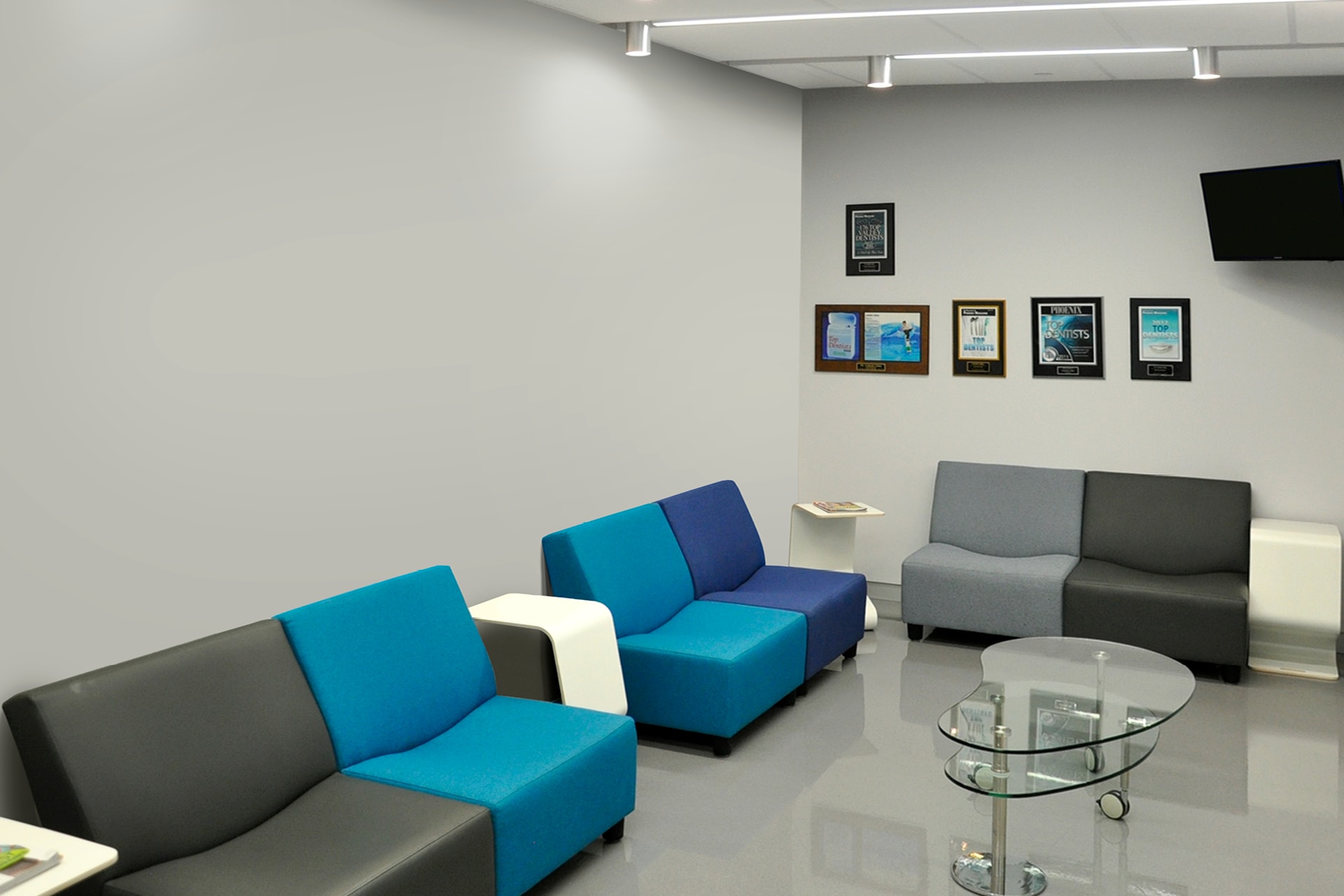


Include Features That Positively Engage Patients and Families Throughout Your Medical Facility
Design should do more than distract, it should create calm, spark curiosity, and encourage connection from the moment a family walks in. We call this intentional engagement, design elements that guide emotions as well as movement.
Tailor interactive and themed elements to different age groups:
- Young children thrive in sensory-rich environments like themed play areas, tactile wall panels, and murals that encourage exploration.
- Teens and preteens appreciate technology-forward features, such as gaming stations, interactive touchscreens, or chill-out zones with a more mature, stylish design.
By layering these options thoughtfully throughout your space, you meet kids where they are developmentally and provide caregivers with a few moments of peace.


Design Your Medical Clinic Layout so it’s Easy and Comfortable to Navigate
Hospital and clinic layouts should reduce confusion and support emotional ease. Long, sterile hallways lined with closed exam room doors can heighten anxiety. Instead, consider:
- Designing zones or “neighborhoods” by patient age or care type to create familiarity and rhythm
- Using color-coded or themed areas to aid in orientation (“You’re in the ocean zone!”)
- Ensuring clear, playful signage and smooth wayfinding tools, such as mascot-guided paths or floor graphics
Smart spatial planning leads to smoother flow and less stress for patients, caregivers, and staff.


Align Design with Healing Outcomes
Design isn’t just about making things “look nice”, it should serve your care goals. Pediatric environments need to embrace the human element, especially the emotional and sensory needs of young patients.
Design strategies that support healing include:
- Separating clinical zones (like treatment or procedure rooms) from play and rest areas to reduce emotional crossover
- Considering special populations, such as children with autism or sensory sensitivities, by including low-stimulation rooms, sound insulation, and muted color palettes
- Incorporating biophilic elements like access to natural light, calming nature murals, or even outdoor spaces to help regulate stress and promote recovery
These principles help build a clinic where design and care work hand in hand.

These best practices form the foundation of modern pediatric healthcare design, spaces where kids feel safe, families feel supported, and your clinical mission shines through in every detail.
Want to see how these strategies come to life? Explore our resource: What is the Future of Pediatric Medical Office Design?
Let's dive deeper into these concepts.

ENVIRONMENT AS A THERAPEUTIC TOOL
In a pediatric hospital, the environment itself can act as a form of treatment. Child life specialists often talk about “positive distraction” – engaging a child’s imagination to help them cope with pain or fear. Themed design takes this concept and runs with it, turning rooms and corridors into tools that support your medical team’s therapeutic efforts. Research overwhelmingly shows that fun and engaging hospital decor isn’t just pretty – it measurably improves patient outcomes. For instance, studies have found that visually stimulating, child-friendly environments can enhance mood, reduce stress, and even improve treatment results for young patients. Well-designed spaces with whimsical elements uplift children’s spirits and create a more welcoming, less intimidating atmosphere, which aids in their recovery.
Reducing Pain and Fear in Medical Patients Through Design
Pain and fear are two formidable foes in any children’s hospital. But the right environment can help disarm them. Colorful murals, playful 3D sculptures, and interactive art provide mental escapes for kids undergoing difficult treatments. One study found that interesting, distracting decor (like patient artwork or murals) helped manage patients’ pain by shifting their focus and making the environment more pleasant. In practical terms, a child who is counting the butterflies in a mural or watching a fiber-optic starry sky on the ceiling is not focusing as much on the IV in their arm. Many hospitals even report that after adding themed distractions in procedure rooms, children require less sedation or are more cooperative because their anxiety levels are lower.
We also design environments to actively engage children in their own care. An interactive play panel in a waiting area or patient room gives a child a sense of control and normalcy – they can play, explore, and just be a kid, which in turn makes the hospital feel less like a prison and more like a place where good things happen. This kind of normalization is known to reduce psychological trauma. As one review of evidence-based design concluded, incorporating fun, engaging elements in hospital spaces leads to better overall patient (and parent) satisfaction. Parents’ perceptions of the hospital also improve when they see their child engaged and happier in the environment, creating a more supportive atmosphere for the whole family.
Supporting Healing and Recovery
Beyond distraction, themed environments can directly support healing in subtle ways.
Nature themes, for example, are more than just beautiful – exposure to nature (even in murals or artwork form) has been linked to reduced stress hormones and quicker recovery times. Imagine an oncology infusion room transformed into a tranquil forest campout scene, where young patients sit beneath a canopy of faux trees and twinkling lights. The ambiance can help lower blood pressure and create a sense of calm that medicine alone might not achieve.
Bright and cheerful environments also promote movement and play, which are crucial for recovery in many cases (children in rehab or physical therapy are more motivated in a playful, game-like setting).
In essence, the entire hospital becomes a therapeutic landscape, with each themed element playing a part: a friendly dinosaur mural encourages a frightened toddler to walk down the hall; a miniature playground with a slide in the waiting area releases endorphins and pent-up energy before a procedure; a soothing underwater-themed MRI suite helps an anxious child remain still by imagining they’re diving with dolphins.
We collaborate closely with child life professionals and medical staff to ensure that our decor not only delights the eye but also serves a healing purpose. Every interactive element, from gamified reward charts (where kids earn stickers from different themed stations) to sensory wall panels for children with special needs, is chosen to support coping and resilience. By leveraging the environment as a therapeutic tool, you create an ally in care: the walls, floors, and even ceilings of your hospital start working with you to comfort and heal your young patients.
Have a pediatric office? Get great design ideas to help improve the experience of your young patients with inspiring ideas in this free design resource from IDS.

DESIGN FOR THE WHOLE FAMILY, NOT JUST THE PATIENT
Add Family-focused Amenities to Your Healthcare Design
Catering to children is critical, but supporting the whole family is what truly elevates a pediatric hospital experience. Family-focused amenities ensure that parents, siblings, and other caregivers feel comfortable and cared for during what can be a stressful time. When families notice thoughtful details aimed at their needs, it builds goodwill and trust – they know your hospital “gets it” when it comes to caring for kids and those who love them.
What kinds of amenities make a difference? Often, it’s the simple, homey touches that relieve the little burdens on parents:
Comfortable & Inclusive Seating
- Rather than stiff rows of chairs, provide seating arrangements that allow families to sit together – like sofa-style benches or configurable seating pods. A parent snuggling with their child on a cushioned bench will feel far more at ease than one perched on a separate plastic chair. Also, include seating for all ages: a few smaller chairs for young kids, sturdy armchairs for grandparents, maybe even bean bags or soft blocks for toddlers to lounge on. This says, “everyone is welcome and accommodated here.”
Refreshments & Nourishment
- Hospitals can be tiring. A small hospitality station can work wonders. Consider a corner with a mini-fridge stocked with bottled water or juice, a coffee/tea maker, and healthy snacks. A complimentary coffee and a bite to eat can recharge weary parents who may have skipped a meal to get to the hospital. “The way to anyone’s heart is through their stomach,” as the saying goes – offering a snack or hot drink is a tangible comfort that makes families feel at home. If possible, decorating this station in theme (e.g. a “campfire coffee nook” in a camping-themed hospital) also adds to the fun.
Entertainment for Siblings (and Parents)
- Boredom and worry are a tough combo, so give families ways to stay pleasantly occupied. Free Wi-Fi is a must nowadays – parents might use it to distract a child with a favorite streaming show, or to do a bit of work while waiting. For siblings, set up an area with hands-on activities: maybe a table with coloring sheets, puzzles, or an interactive touch-screen game wall. In larger waiting areas, some hospitals create a mini movie theater or a separate TV playing children’s cartoons, so that kids can watch a show while adults perhaps have a quieter news or info channel in another zone. If space allows, a dedicated siblings’ playroom near treatment areas can keep brothers and sisters safely entertained with books, toys, and supervised play while parents focus on the patient.
Quiet Rooms and Privacy
- Not every moment in a children’s hospital is playful – families sometimes need a quiet space to decompress or have a private conversation. Designing a comfortable family room or serenity space shows respect for these needs. Such a room could be softly themed (e.g., a peaceful starry night or gentle nature motif) to provide calm, with comfortable chairs or even a couch. Dimmable lighting, phone charging stations, and maybe a small library of books for both kids and adults can make it a refuge. Parents might use it to make a phone call, have a brief cry, or just gather their thoughts away from the hustle.
Practical Conveniences
- Little amenities can remove big hassles. Things like stroller-friendly layouts (ramps, wide corridors, automatic doors), plenty of clearly marked restrooms with changing tables, and even family restrooms are crucial. If your hospital sees many nursing mothers, a private lactation room with a cozy chair and outlets is greatly appreciated. Lockers or cubbies for belongings in play areas, step stools in bathrooms for kids – these small details ensure everyone, from a toddler to a teen to an adult, can use the facility with ease. They might go unnoticed when done right, but families will definitely notice if they’re absent.
Family Engagement
- Consider ways to involve families positively. A “Wall of Hope” or gratitude wall where families can post notes or stories can create community and encourage them to interact in a meaningful way. Some hospitals have started including education corners for parents – a little nook with pamphlets, themed infographics, or digital screens sharing health tips in an approachable way (often featuring the hospital mascot to keep it fun). These amenities turn passive waiting time into an opportunity for learning and connection.
By expanding your focus to include family-focused amenities, you transform the hospital from a place people have to be, into a place they want to be when their child needs care. Parents who feel looked after will have greater confidence in the hospital staff and will be more likely to cooperate and communicate openly – all of which benefits the child’s care. Moreover, when families leave your facility thinking, “They thought of everything, even for us,” you’ve created ambassadors who will sing your praises to others. It’s about caring for the caregivers, so they in turn can better care for their children.
Family-Centric Arrival Experience
First impressions matter – especially in healthcare. The arrival experience sets the tone for the entire visit. We design hospital lobbies and reception areas to be family-centric, making sure that the moment young patients and their caregivers step inside, they feel comforted and even a bit enchanted. A children’s hospital shouldn’t look or feel like a regular hospital at all; kids should feel like they’re entering a theme park, not a medical building.
Imagine a reception area where a smiling safari elephant is sculpted around the check-in desk, or a giant aquarium-themed mural spans the lobby wall with friendly sea creatures waving hello. These kinds of whimsical touches immediately signal to children that this place is for them.
Colorful, engaging decor at the entrance can distract from the clinical smells and sights that typically cause nerves. For parents, touches like comfortable seating clusters and clear, friendly signage make navigation easier, reducing their stress as well.
Creating an Inviting First Impression

To design a family-centric arrival space, think about both fun and function. Bright wall murals with relatable characters or local themes provide a visual hug as families come through the door. A themed reception desk (for example, shaped like a castle, rocket ship, or jungle hut) can turn the check-in process into a conversation starter with curious kids.
Consider adding an interactive welcome element, such as an “I Spy” wall mural or a digital game kiosk in the waiting area, so kids have something to focus on besides worry. These elements engage children’s curiosity and playfulness, easing the transition into the hospital setting.
Comfort for the Whole Family
Family-centric design also means acknowledging that parents and siblings are part of the patient experience.
Providing a play zone in the lobby – perhaps a small themed playhouse or activity table off to one side – lets siblings burn off energy and shows parents you’ve thought of their needs.
Seating should be arranged so that families can sit together (think bench seating or grouped chairs) rather than isolation.
Little conveniences go a long way: a stroller parking nook, a spot for diaper bags and coats, and even a refreshment station with coffee or water can make arriving families feel cared for.
The goal is for families to walk in and immediately feel a sense of relief – the opposite of the dread they may have anticipated on the drive over. When kids are giggling at a funny character sculpture in your lobby, you’ve already won half the battle in relieving anxiety.
By making the arrival experience welcoming and engaging, you set a positive tone that carries through the rest of the visit. The hospital becomes not just a place to “get through,” but a place where families encounter moments of delight right from the start.

ACCESSIBILITY AND INCLUSIVITY IN HEALTHCARE DESIGN AND DECOR
Truly child-friendly design must be inclusive design. Kids come in all shapes, sizes, abilities, and backgrounds – and a well-themed hospital welcomes every child to engage with the environment on their own terms. At IDS, we prioritize making our themed environments as accessible and inclusive as possible, so no child or family member feels left out of the fun.
Physical Accessibility in Your Medical Space
We integrate accessibility seamlessly into theming.
For example, interactive panels and games are mounted at heights reachable by someone in a wheelchair and usable from a seated position. Pathways through exhibits or play zones are wide and free of tripping hazards, even as they wind through imaginative scenery. We choose durable, soft flooring where appropriate to cushion falls and support those with mobility devices. Importantly, all our decor materials meet safety and hygiene standards – they’re easy to clean and rounded where kids might bump. Themed or not, the space must be safe and navigable for all.
Sensory Considerations
Many children – including those on the autism spectrum or with sensory processing differences – can be overwhelmed by too much stimuli. Inclusive design means creating options and balance. We use colors and lighting thoughtfully: while bright colors excite and attract kids, studies suggest that children with autism often prefer softer, more neutral tones and gentle lighting. So, in high-stimulation areas we suggest including a small sensory break room or quiet corner with muted colors, dimmable lights, and perhaps tactile sensory wall toys to help a child self-regulate.

We suggest avoid flickering fluorescents and favor indirect, diffused lighting (for instance, backlit murals or LED “sky” panels) to minimize harsh glare. If we know a space will host many sensory-sensitive kids (like an autism therapy center), we might use a calming aquatic or nature theme with lots of greens and blues, as these tend to be soothing.
Conversely, in an area meant to energize (like a playroom), we can dial up the color and interactivity, but still provide an adjacent retreat spot. The environment should adapt to different needs: one child might be enthralled by the noisy interactive room with video games and slides, while another child might need a sound-dampened nook with a weighted blanket and gentle visuals. Our design will accommodate both.
Cultural and Age Inclusivity
Inclusivity isn’t only about disabilities. We aim to make children from diverse backgrounds feel represented and comfortable. This might mean incorporating multicultural elements in murals – kids of various ethnicities playing together, or artwork reflecting local culture and language.

Signage can be icon-based and multilingual, using universally understood symbols (a teddy bear for pediatrics, a bathroom sign that’s family-inclusive, etc.) so that even if families don’t read English well, they can navigate easily.

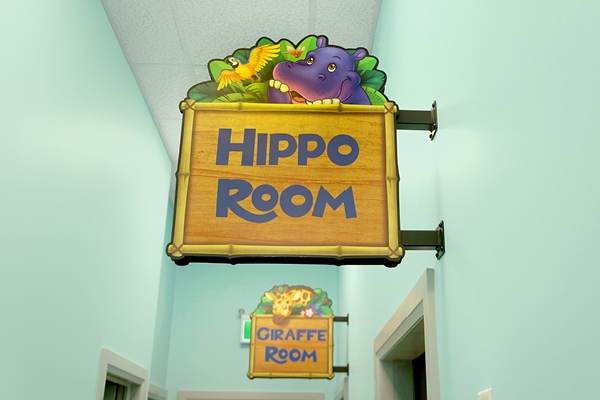
Theming can celebrate local community heroes or stories that children of that area relate to, making them feel a sense of belonging. Additionally, our designs consider a wide age range – what delights a toddler might bore a teenager, and vice versa. So we mix elements: a vibrant cartoon mural at toddler eye-level, but a sleek modern gaming station for teens in the same waiting room, for instance. No one should feel out of place.
Even parents are part of our inclusivity approach: decor can include subtle details that adults appreciate (like clever movie references or aesthetically pleasing art styles) so they, too, feel this space is for them and not just “kiddie land.” The result is a hospital that respects and embraces everyone who walks through its halls.
Designing for Dignity
Above all, inclusive themed design respects the dignity of all patients. A child with a hearing impairment sees visual alarms or interactive screens with captions – and also sees fun murals and characters, not just clinical warnings. A child with physical disabilities finds that they can play on the same cool equipment as their peers, fostering social inclusion. Every child should feel, “This place was made for me,” whether they roll in a wheelchair, use an assistive device, or just feel a little shy or different.
The magic of theming is it creates common ground – under the sea or in the jungle, everyone is an explorer. We take care that every explorer can join the adventure.
Bringing Principles to Life
Now that we’ve explored the emotional and ethical goals of pediatric healthcare design, from reducing anxiety to honoring inclusivity and dignity, let’s look at how these principles come to life across different zones in a medical facility.
A successful hospital theme isn’t about isolated decor elements, it’s about building a cohesive, immersive journey for children and families that supports healing every step of the way.

FUN THEMED ZONES IN A HOSPITAL OR MEDICAL CLINIC
A successful hospital theme is holistic – it weaves through every area of the facility, with each space tailored to its function and visitors’ needs. We design themed zones for different clinical areas so that the immersive experience continues from room to room, while still matching the purpose of each space. Consistency is key (so the whole hospital tells one coherent story), but we also pay attention to the unique challenges and opportunities each area presents.
To support this, we strategically layer in age-appropriate, sensory-friendly, and developmentally supportive features throughout the facility. These design elements encourage calm exploration, spark curiosity, and promote positive emotional responses:
- Interactive Play Panels in waiting rooms or hallways provide tactile stimulation and visual delight without overstimulating children.
- Themed Game Stations give older kids and teens something to focus on during longer wait times, options can include tablet kiosks or digital wall games tailored to your theme.
- Story-driven Wall Murals are more than art, they’re part of the environment’s narrative, with “I Spy” moments, hidden characters, or mascot-led story paths that guide kids through the space.
- Immersive 3D Sculptures provide safe, tactile opportunities to touch, climb, or pose for photos, building comfort and even excitement around care areas.
Let’s take a closer look at how themed design can be integrated across different areas of your facility to created zoned hospital decor.
13 Zones and How to Theme Them
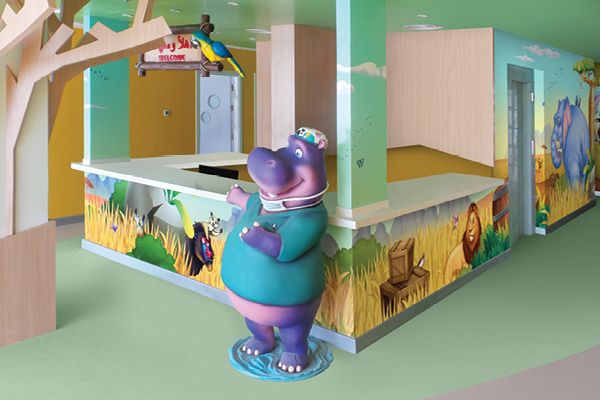
1. Main Lobby / Entrance
Purpose: Set the tone, reduce anxiety from the moment families arrive
Best Theming Elements:
- Large-scale sculptures or installations (e.g., a tree canopy, space rocket, aquarium archway)
- Themed reception desks (lighthouse, castle, submarine)
- Floor decals guiding patients on an adventure (paw prints, stepping stones, race tracks)
- Wall murals introducing the theme or mascot story
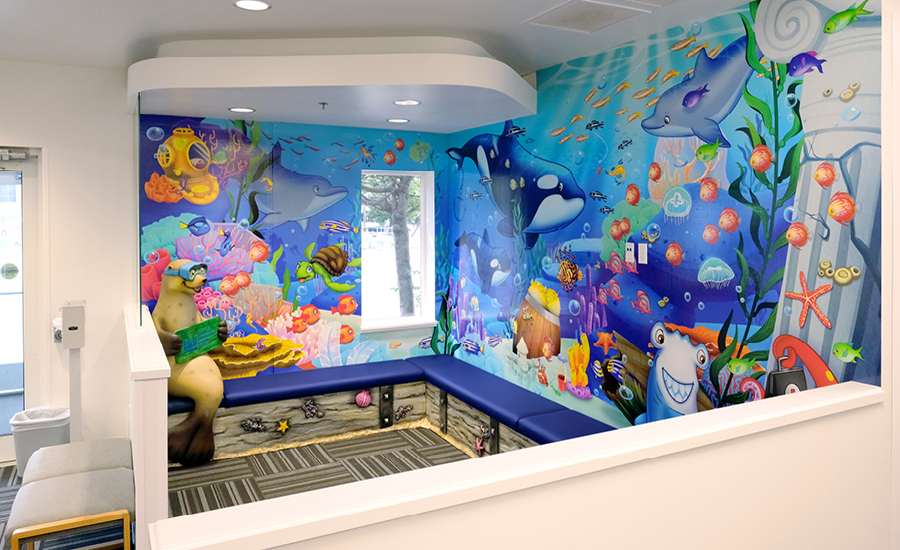
2. Waiting Rooms
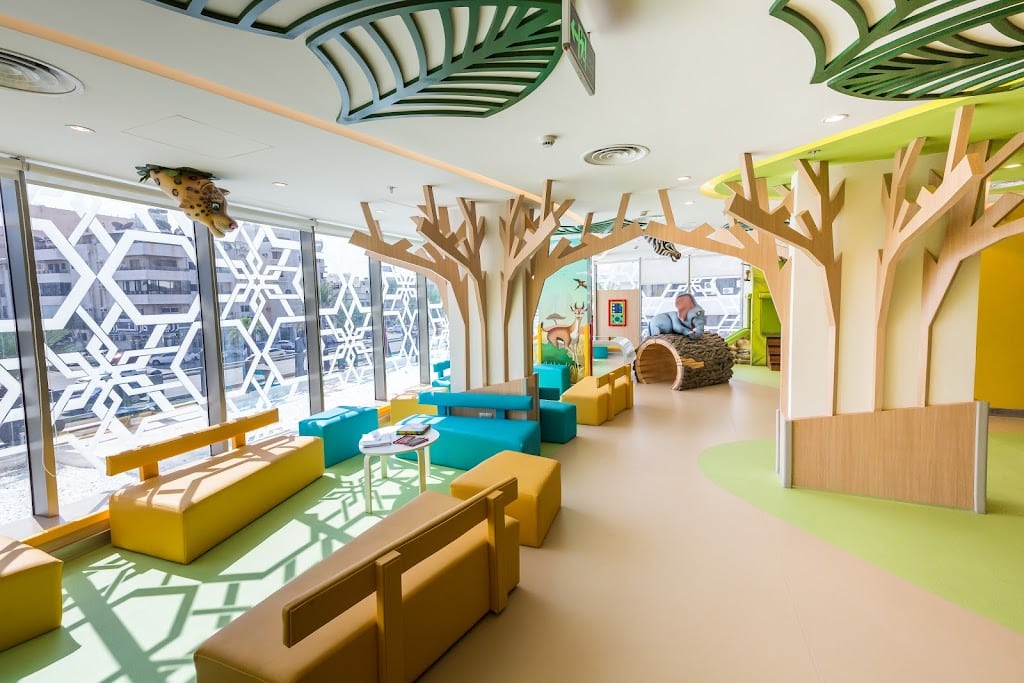
Purpose: Comfort, distraction, entertainment
Best Theming Elements:
- 3D sculpted seating (logs, lily pads, safari jeeps)
- Interactive play areas (quiet sensory walls, games, themed bookshelves)
- Wall murals with soft or playful scenes (underwater, enchanted forest, outer space)
- Ceiling elements (cloud mobiles, vines, glow stars)
- Digital video game zones framed in themed surrounds
3. Hallways / Corridors
Purpose: Ease navigation, maintain immersion, reduce stress
Best Theming Elements:
- Directional floor graphics (follow the river, treasure trail, footprints)
- Progressive murals (tell a story as you move through the space)
- Lighting features that mimic daylight, twinkling stars, or undersea shimmer
- Wayfinding signs that show the way


4. Patient Exam Rooms
Purpose: Provide comfort, minimize fear during checkups
Best Theming Elements:
- Wall-to-wall murals in calming themes (meadow, ocean, soft sky)
- Ceiling visuals for distraction (fiber-optic stars, floating clouds, animal friends)
- Character decals near medical equipment to create a playful narrative
- Custom cabinetry that blends into the theme (tree trunks, coral reefs)

5. Treatment Rooms / Procedure Rooms
Purpose: Calm nerves during more serious or intensive treatments
Best Theming Elements:
- Muted murals in soothing tones (mountains, night sky, forest trail)
- Ceiling projection systems (e.g., moving clouds, soft lights, slow animations)
- Themed monitor casings (portholes, storybook frames)
- Integrated soundscapes (birds, waves, wind chimes)

6. Nursing Stations
Purpose: Keep zones cheerful and inviting for both kids and staff
Best Theming Elements:
- Custom cladding that ties into the theme (jungle hut, igloo, pirate helm)
- Themed signage with character helpers or fun wayfinding icons
- Story or mascot tie-ins that connect stations to the surrounding murals

7. Lab & Imaging Rooms (e.g., X-Ray, MRI)
Purpose: Ease patient fears about machines and unfamiliar procedures
Best Theming Elements:
- Machine wraps with cheerful designs (submarines, space pods, jungle trucks)
- Mural continuity from the hallway to the room (makes machines feel less foreign)
- Ceiling distractions like constellations, underwater bubbles, or smiling animals
- Character-led instructions to explain the process in a kid-friendly way

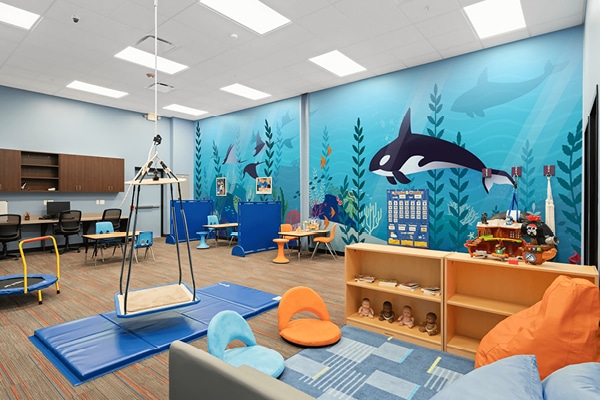
8. Therapy Rooms (Speech, OT, PT, ABA)
Purpose: Support development through engaging, imaginative space
Best Theming Elements:
- Zoned murals to define play, exercise, and quiet areas
- Themed sensory walls (tactile panels disguised as tree bark, clouds, treasure maps)
- Floor decals for gross motor play (hopscotch, agility trails, lily pads)
- Interactive props for skill-building that match the environment
9. Family Lounge or Respite Areas
Purpose: Recharge space for caregivers and siblings
Best Theming Elements:
- Relaxing mural backdrops (gardens, beach, night sky)
- Soft seating areas with sculpted benches or nature-themed furniture
- Mini storybook nooks or quiet corners with a calming theme
- Gentle ambient lighting and natural textures

10. Outdoor Play / Healing Gardens
Purpose: Physical outlet, emotional recovery, connection to nature
Best Theming Elements:
- Sculpted animal or nature play structures
- Sensory paths (textured walking surfaces, color trails)
- Themed garden zones (e.g., fairy garden, dinosaur dig, explorer’s camp)
- Interactive art installations that encourage movement or reflection
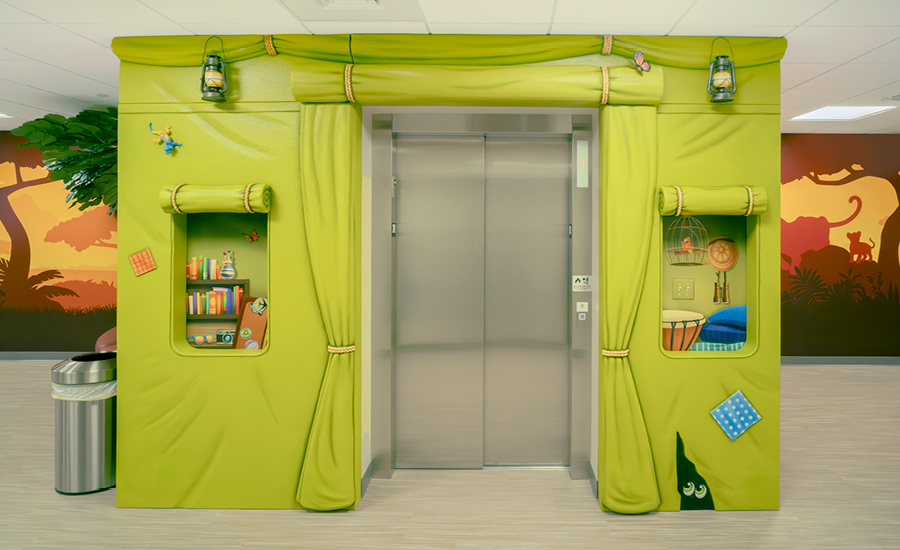
11. Elevators & Stairwells
Purpose: Extend immersion, reduce stress in transition zones
Best Theming Elements:
- Themed vinyl wraps inside elevators (e.g., hot air balloon ride, rocket launch, underwater sub)
- Story-stair murals showing scenes per step or floor
- Ceiling decals or audio in elevators to make the ride playful or calming
12. Photo Op Spots
Purpose: Encourage celebration, sharing, and positive memories
Best Theming Elements:
- Bravery wall with a mascot and badge system
- 3D sculpture for photos (e.g., high-five a bear, sit in a storybook throne)
- Milestone backdrops (“Last Treatment Today!” or “I Was So Brave!”)
13. Exterior Building Decor
Purpose: Curb appeal, set expectations, draw in clients
Best Theming Elements:
- Sculpted signage (e.g., giant teddy bear, rocket ship, lighthouse)
- Outdoor murals or entry arches
- Window graphics featuring mascots, peek-through scenes, or seasonal fun
- Landscaping features (rocks, props, or themed planters that match interior)
By dividing the hospital into these themed zones, we ensure a cohesive yet varied experience. Each zone supports children through the story of their hospital visit: from being greeted by fun characters, journeying through magical hallways, bravely facing treatment in comforting themed rooms, to finally relaxing or celebrating in play areas and photo spots.
Cohesive theme zoning essentially turns your facility into a storybook adventure that patients will remember and even look forward to revisiting. It also aids orientation – children often remember, “I had my x-ray in the jungle room and then I went to the ocean room for the doctor,” which helps them make sense of the hospital layout in a non-threatening way. Themed zones bring order, clarity, and delight to the hospital journey.
Decor Built for Daily Use: Cleaning & Longevity
In pediatric hospitals, every surface must do more than look great, it must stand up to constant cleaning, touch, and wear. That’s why IDS products are built with both beauty and durability in mind.
From murals to 3D sculptures, all decor elements are sealed with hospital-grade coatings that make them easy to clean and sanitize. Our materials resist scuffing, harsh disinfectants, and UV exposure, making them ideal for high-traffic medical environments. Even our tactile elements and interactive panels are designed to hold up to curious hands and repeated use without fading or degrading.
We understand that infection control and cleanliness are top priorities in healthcare. Our finishes are safe for daily disinfecting routines, and our products are rounded, smooth, and easy to wipe down.
Learn more about how IDS decor is engineered for the real world: Built to Last: The Maintenance, Safety, and Durability Behind Every IDS Product

GETTING STARTED: PLANNING A THEMED PEDIATRIC SPACE
Transforming a pediatric environment doesn’t have to start with a complete overhaul. Many successful projects begin with a single impactful space, like the lobby or a treatment room, and grow from there. The key is building support and clarity across departments early in the process.
Here are a few tips to help hospitals plan and align stakeholders:
- Identify Internal Champions: Involve key departments from the beginning—Child Life, Facilities, Marketing, and Administration. Each brings a unique perspective and priority to the table.
- Start Small, Think Big: Begin with a space that will have high visibility and immediate impact, such as a waiting room or entrance corridor. This provides proof of concept for future expansion.
- Explore Funding Options: Themed design often attracts donor interest. Consider naming opportunities, themed donor walls, or fundraising campaigns to support the investment.
- Engage Patient-Family Advisory Councils: Involving families in the early stages ensures the final design reflects real needs and builds emotional buy-in from your community.
- Share Visuals Early: Use mockups or design boards to bring the vision to life and generate excitement across leadership teams. Visuals help align goals, clarify the scope, and ease the approval process.
Thoughtful planning is just as important as great design. With the right internal support, even small thematic upgrades can lead to a transformative care experience.
Trust the Design Experts with Your Hospital Decor

It might be tempting to hire a local decorator or a general design firm for your hospital project, but cutting corners with an unspecialized approach can cost you in the long run. Pediatric healthcare environments require more than nice colors and generic furnishings.
Design experts who specialize in children’s hospitals and pediatric care:
- Understand how to create a calming, child-friendly atmosphere that enhances the patient and family experience.
- Have the tools, training, and technology to align every design decision with clinical safety protocols and infection control standards.
- Bring cost-saving access to specialized vendors and durable materials built for medical environments.
- Focus on what they do best, so your healthcare team can focus on what you do best: patient care.
Investing in professional hospital decor and themed environments isn’t just about aesthetics, it’s a strategic, intentional step toward creating a more welcoming, healing-centered space for your youngest patients.
Contact Imagination Design Studios (IDS) for more hospital decor resources. Get started transforming your office from a mundane to magical patient experience.
