“Perception is everything.” Filtering your perception of the patient experience (or customer experience) you offer through the lens of how your patients perceive their visit is vital to the success of your clinic.
Henry David Thoreau perhaps said it best –
“It’s not what you look at that matters, it’s what you see.”
Patient experience is often less about the obvious and more about the details and realities in the margins. What’s truly “seen” makes all the difference.
Your dental practice operations are judged on two perspectives:
1. A business perspective.
2. A customer service perspective.
Patient experience happens when your business goals and customer service intersect. When those perspectives align, your patient experience (according to Thoreau) will truly be “seen.”

WHAT IS PATIENT EXPERIENCE?
Patient experience is more than whether someone had a “nice visit”—it’s the sum of every impression, touchpoint, and emotion they associate with your clinic. It includes your services and team, but also your reputation, your space, and the way you make patients feel before, during, and after care.
It’s what turns a first-time visitor into a lifelong advocate—or not.
In healthcare, satisfaction is no longer defined solely by outcomes. The journey matters just as much as the destination.
The Patient Experience Is a Journey
Every step a patient takes—whether digital, physical, or emotional—contributes to how they perceive your care.
Key touchpoints include:
- Their first impression via your website or Google listing
- Booking or calling your office
- Arrival, parking, and check-in
- The environment and energy of your reception area
- Communication with staff and providers
- Clinical interactions, treatment, and follow-up care
- Billing, insurance, and post-visit communication
None of these moments stand alone. Together, they shape whether a patient feels welcome, understood, and cared for, or confused and stressed.
What Defines an Exceptional Experience?
Beyond services and clinical skill, the following elements play a key role:
- Arrival & Parking: Easy-to-navigate spaces reduce stress before patients even walk in the door.
- Reception & Theming: Visual appeal, signage, and themed decor immediately set the emotional tone.
- Front Desk Interaction: Friendly, informed staff who make eye contact, use names, and offer clarity build trust.
- Waiting Area Amenities: Comfortable seating, Wi-Fi, water stations, entertainment, and thoughtful touches speak volumes.
Every detail either adds to or subtracts from the experience. The more friction you remove, the more trust you build.
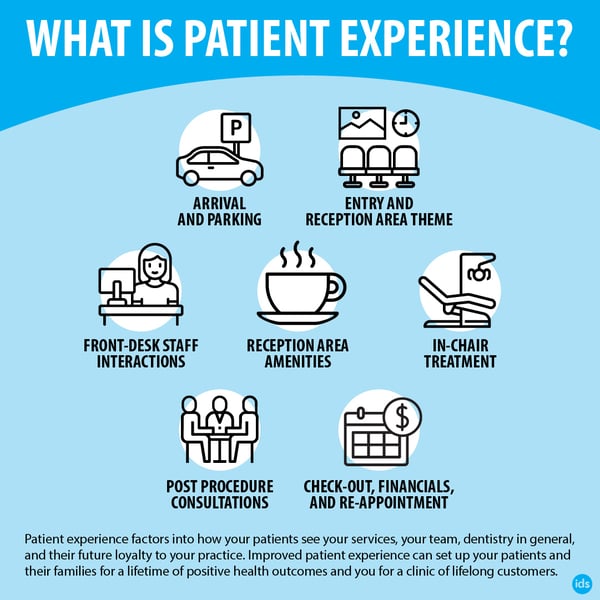
If you’re curious about how to accomplish this goal, there are four strategies you can implement now.
4 Ways to Elevate the Patient Experience
1. Adapt to Their Expectations
Empathy is at the heart of patient care. Try to see your practice through your patient’s lens—not just your clinical lens.
Patients may not be thinking about oral health—they’re thinking about:
- Pain or discomfort
- Busy schedules
- Budget or insurance concerns
- Fear of dental procedures
To meet expectations:
- Communicate clearly and consistently
- Align care plans with patient goals
- Be warm, not transactional

2. Design a Memorable Environment
Every clinic has a “vibe”—whether you’ve designed it or not. Be intentional.
Is your space calming? Energetic? Child-friendly? Upscale? Your environment should match your audience and reflect your values.
Patients associate what they see and feel with how much they trust you. A themed, well-designed space becomes part of your brand—and something they remember, talk about, and come back to.
3. Make a First Impression That Lasts
First impressions happen fast and stick. Make sure yours reflects professionalism and care.
Start strong by:
- Greeting patients by name
- Keeping attire neat and approachable
- Being on time and organized
- Making eye contact and listening with focus
These basics still matter—and they set the tone for every interaction that follows.
4. Educate and Empower
Modern patients expect to be informed participants in their care—not passive recipients. Build experience through education.
Practical ways to do this:
- Use plain language when explaining treatment
- Offer printed or emailed aftercare instructions
- Share blog posts, videos, or FAQs through your website and social channels
- Send follow-up communications that reinforce trust and value
A well-informed patient is more likely to comply with care, return for follow-ups, and recommend your clinic to others.
Now that you understand how the patient experience unfolds, it’s time to explore how these impressions directly impact your clinic’s financial growth.
For a deeper dive, check out this resource: What is Patient Experience and Why Does It Matter?
Now, it’s essential to see the impact of patient experience on your revenue stream.

HOW PATIENT EXPERIENCE IN HEALTHCARE IMPACTS REVENUE GROWTH
Patient experience isn’t just a feel-good initiative, it’s a measurable revenue driver. Every interaction a patient has with your clinic, from the first phone call to the final follow-up, contributes to their perception of value and directly impacts your bottom line.
Better Experience = Higher Revenue
A long-term study of Swiss hospitals found that better patient-reported experiences were associated with significantly higher hospital revenue (an increase of approximately $1,790 USD per year) and lower hospital costs (by about $1,191 USD per year), showing that experience improvements not only bring in more patients but also reduce financial strain (PubMed).
Higher Satisfaction = Better Profit Margins
A Deloitte analysis of U.S. hospitals from 2008 to 2014 revealed that hospitals with top-box HCAHPS scores (patients rating their experience a 9 or 10 out of 10) achieved net margins of 4.7%, compared to just 1.8% for those with lower scores. Deloitte concluded that a 10-point improvement in patient experience scores correlates to a 1.4% increase in net margin and a 1.3% increase in return on assets (ROA) (Deloitte).
Patient Experience Drives Profitability
Other studies have found that healthcare organizations delivering superior patient experience can achieve up to 50% higher profit margins compared to those with average experience scores (Physicians Practice).
Experience Affects Reimbursements
Patient satisfaction scores now play a role in reimbursement models such as the CMS Hospital Value-Based Purchasing Program, which placed $1.9 billion in Medicare payments at risk in 2020 based on performance scores, including patient experience (Ensemble Health Partners).
Even a 5-point improvement in HCAHPS scores has been shown to result in an average 1% increase in profit margin for hospitals (HHS).
Word-of-Mouth, Reviews, and New Patient Volume
Patient experience also fuels referrals, retention, and reputation. According to Invoca, 94% of patients use online reviews to evaluate healthcare providers, and 84% trust those reviews as much as a personal recommendation (Invoca).
Rush University Medical Center found that high satisfaction scores were associated with an additional $2.3 million in annual revenue, driven largely by increased patient volume (Keona Health).
Risk Reduction and Cost Savings
Improved patient experience also leads to fewer malpractice claims, lower legal risk, and reduced administrative burden. In fact, each point increase in satisfaction is associated with 5% fewer risk events (Deloitte).
What You Can Do
To translate patient experience into revenue growth:
- Track the Right Metrics
Monitor satisfaction via HCAHPS, NPS, and online reviews. - Create a Feedback Culture
Share results with your team, act on trends, and publicly respond to patient input. - Align with Value-Based Care Models
Improve communication, responsiveness, and clinic environment—core drivers of HCAHPS. - Invest in Patient-Centric Design & Tech
From themed spaces to virtual check-in systems, create environments that feel easy, warm, and modern. - Listen Intentionally
Referrals and loyalty grow from patients who feel heard and cared for.
It follows that where satisfaction goes revenue grows. Explore more about revenue growth with this content: How Patient Experience in Healthcare Impacts Revenue Growth
Speaking of satisfaction, let’s take a look at some specifics about that.

HOW TO IMPROVE PATIENT SATISFACTION
Is patient happiness measurable? To an extent—yes. While clinical outcomes are essential, how patients feel about their care experience is equally important and often determines whether they’ll return or recommend you to others.
It’s not just about making people happy, it’s about building trust and loyalty. A positive patient experience shows patients you value their time, comfort, and well-being. And when satisfaction and loyalty align, long-term growth follows.
According to a study by PwC “73% of consumers say a good experience is key in influencing their brand loyalties.”
That said, patient satisfaction shouldn’t always mean saying “yes” to every request. True satisfaction comes from delivering care with compassion, clarity, and respect—even when tough medical decisions must be made.
7 Ways to Boost Patient Satisfaction
These strategies help foster a stronger connection with your patients, increase retention, and promote positive word-of-mouth.
1. Engage Them Online
Your digital presence often makes the first impression. Ensure it reflects your values and care quality.
- A modern, mobile-friendly website
- Clear, easy-to-navigate information
- Educational content and FAQs
- Online scheduling and patient portals
2. Communicate Comfort and Reassurance
Every patient interaction is an opportunity to reduce anxiety and build rapport.
- Train staff to greet with warmth and professionalism
- Maintain a calm, reassuring tone in appointments
- Practice active listening and empathy
3. Make Scheduling Easy and Flexible
Convenience goes a long way in creating satisfaction.
- Offer early morning, evening, or weekend appointments
- Provide virtual consultations where appropriate
- Use automated reminders and easy rescheduling tools
4. Enhance the In-Clinic Experience
A well-designed space helps ease perceived wait times and sets a positive tone.
- Free Wi-Fi and device charging stations
- Beverages, snacks, or kid-friendly entertainment
- Comfortable seating and clean, organized spaces
5. Create a Welcoming, Thoughtful Environment
The decor and atmosphere affect how patients feel about your clinic.
- Soothing, sensory-friendly design for adults
- Fun, themed spaces and play areas for children
- Personal touches like seasonal décor or calming music
6. Empower Patients Through Education
Informed patients are more confident and satisfied with their care.
- Provide clear explanations about diagnoses and treatments
- Share educational blog posts, newsletters, or handouts
- Encourage questions and shared decision-making
7. Build Relationships That Last
Loyalty is built on feeling valued, not just treated.
- Recognize patient milestones (e.g., birthdays or first visits)
- Personalize communication where possible
- Follow up after major treatments or visits
Each of these steps matter to your patient experience. Take an in-depth look with this resource: How to Improve Patient Satisfaction in 7 Steps
Patient satisfaction is an ongoing effort that blends design, communication, convenience, and care. When done right, it leads to stronger relationships, glowing reviews, and lifelong loyalty.

We’ve touched on design a bit throughout our discussion, which also contributes to your patient experience.
With that thought in mind…

DESIGN YOUR OFFICE AROUND YOUR PATIENT EXPERIENCE
Your general office ambiance is a good place to start when considering how design affects the patient experience, but there are more layers to strategic design.
The patient experience is about appealing to the conscious and the subconscious. Recall that we earlier noted that it’s more about what’s “seen” than what’s being observed.
Your design should be visually stimulating, emotionally appealing, and fit the overall patient experience with your clinic.
Design that creates a consistent patient experience will involve some core strategies.
Make it Functional
There’s a flow that promotes efficiency and engagement throughout your clinic. Keep in mind that the flow might not be evident to your patients as much as it is your team.
Architecture, ergonomics, and space maximization are the areas of function that you would want to emphasize.
Think about providing a variety of seating options to fit families or single visitors, or how ceiling height affects the way people experience a space. Every detail matters.
Be Comfortable and Ergonomic
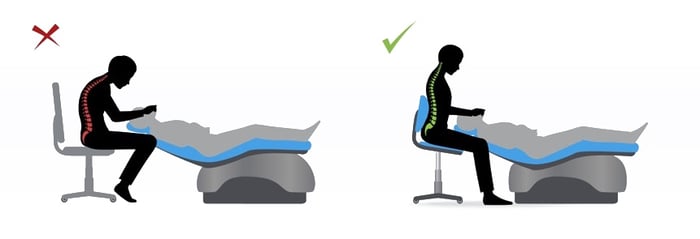
Your team is the primary recipient of the ergonomic details. The payoff is their ability to provide a better patient experience because they’re more comfortable (and healthy) doing their work.
Comfort, of course, has strong value to your patients. That combined with an ergonomically equipped space will enhance the overall experience your patients have. If you and your staff are comfortable and can move freely throughout the workspace without bumping into equipment or stretching in pain, your patients will feel comfortable and at ease.
Trust the Experts

This is where your clinical expertise blends with aesthetic expertise. Are you going for a spa-like experience, greenery and plants to bring life to a space, fun for kids and families, or urban and industrial? Draw inspiration for the area you’re in and the type of clients you service. It’s tempting to go DIY (Do-It-Yourself) on occasion, but investing in those skilled at design will boast a bigger payoff than DIY.
Expert designers are skilled at matching your unique culture with design specifics. They have the tools, technology, and vendor access to provide the “heavy-lifting” so you can stay focused on your patient care.
An investment of your design-dollars in a snazzy front-entry is a great idea. It’s also vital that you carry that intentional energy throughout your entire facility, so be sure not to forget about restrooms, hallways, and of course dental operatory spaces. Your overall style and theme should feel planned and weave its way throughout the entire patient visit.
Before you decide which route is best for you, check out this article for more inspiration: How to Create a Dental Design Strategy That Enhances Patient Experience
Now, let’s explore how marketing and patient acquisition flow into your patient experience.
Have a pediatric office? Get great design ideas to help improve the experience of your young patients with inspiring ideas in this free design resource from IDS.

DESIGNING FOR ACCESSIBILITY AND INCLUSION
Creating a welcoming patient experience means designing a space where everyone feels seen, safe, and supported. Modern healthcare environments must go beyond aesthetics to address the diverse needs of the patients they serve—including neurodivergent individuals, culturally diverse families, and those with physical or sensory challenges.
1. Support for Neurodivergent Patients
Especially in pediatric settings, neurodivergent patients (including those with autism, ADHD, and sensory processing disorders) benefit from environments that reduce overstimulation and offer predictable routines.
Design strategies:
- Use calming color palettes (soft blues, muted greens, warm neutrals)
- Reduce harsh lighting and provide dimmable or natural light options
- Offer quiet spaces or “calm corners” in waiting rooms
- Use simple, clear visual signage to aid wayfinding
2. Sensory-Friendly Environments
Sensory sensitivities aren’t limited to children. Many adults struggle with overwhelming environments too.
Sensory-friendly features:
- Sound-dampening wall panels or ceiling tiles to reduce echo and noise
- Odorless or low-odor materials and disinfectants
- Textural variety in materials that are soft, non-threatening, and soothing to the touch
- Optional noise-canceling headphones or weighted lap pads in pediatric clinics
3. Cultural and Language Inclusivity
Language and cultural awareness are key components of patient trust and comfort.
Ways to be more inclusive:
- Offer multilingual signage and intake forms
- Employ staff who speak common regional languages
- Include culturally diverse characters or visual elements in murals or educational content
- Train staff on culturally competent communication and patient care
4. Physical Accessibility for All
Every space should meet and exceed basic ADA requirements to ensure physical access is never a barrier.
Best practices:
- Design wide hallways, low counters, and barrier-free paths to care
- Ensure all doorways and treatment rooms are accessible to mobility aids
- Provide seating options with arms for ease of sitting and standing
- Use push-button or motion-activated doors for patients using mobility devices
Inclusion isn’t just a checkbox, it’s a patient experience strategy. By designing with accessibility in mind, your practice or clinic creates a space that welcomes more patients, reduces anxiety, and reflects a genuine commitment to compassionate, equitable care.

OPTIMIZING YOUR OFFICE FOR PATIENT ACQUISITION
Gaining new patients isn’t just about ads or search rankings, it’s about making every first impression count. A patient’s journey from curiosity to commitment is shaped by the physical space you create, the culture your team expresses, and the confidence you inspire.
Long-term relationships begin with a positive first experience. Your office, services, team, and even your insurance options all contribute to that decision-making moment.
Be Intentional: Acquisition Starts Before the First Visit
Acquiring a new patient can cost hundreds of dollars in marketing, staffing, and operations. But it’s not just about spend, it’s about conversion. That moment when a potential patient chooses you over every other provider.
That decision is driven by:
- How approachable and inviting your practice feels
- How clearly your marketing and messaging communicate value
- How easy it is to take the next step: book, call, or walk in
If you want to be the provider patients choose, design your space and processes to make that choice feel easy and rewarding.
Consider the Environment: It’s Not Just Design, It’s Emotion
Patients don’t only evaluate your clinical credentials—they evaluate how your clinic makes them feel. The physical environment sets the tone. Patients subconsciously ask themselves:
- Will this be a stressful experience?
- Will I feel safe and cared for?
- Do I trust this place and the people in it?
- Was the overall experience worth my time?
Environmental solutions to improve those perceptions:
- Make check-in intuitive with clear signage and an inviting front desk
- Add a welcome station with water, coffee, or tea
- Highlight credentials, certifications, and testimonials visibly
- Use art, theming, and decor to set a warm, confident tone
5 Design & Experience Details That Influence Patient Acquisition
1. Design Every Step of the Journey
From curb appeal to treatment room, every detail matters. Don’t let cluttered layouts or bland spaces disrupt the emotional connection you’re building. Your design should support your care, not distract from it.
2. Create a Welcoming Mood Immediately
The entry space is your handshake. Make it feel calm, clean, and confident. Comfortable seating, curated music, and natural light can make a big difference.
3. Strengthen Relationships Through Design
Design can encourage interaction. Use layout and flow to allow for private conversations and face-to-face connections. Ensure your space supports easy communication between team and patient.
4. Educate and Empower in Every Interaction
Patients need more than information, they need understanding. Don’t just explain what you’re doing, explain why. Use visuals, models, or even themed environments to make complex concepts more approachable. Invite questions without judgment.
5. Think Beyond the First Visit
Acquisition is only step one. Your goal is retention. Design your follow-up spaces, recall systems, and communication strategies to support long-term relationships, not one-time visits.
Patient Experience Is Patient Acquisition
Every new patient interaction is part of your growth strategy. Office design, culture, and communication should work in harmony to turn curious browsers into loyal patients.
And remember: all acquisition begins with a spark, usually through marketing.
This resource can help further with that: Important Details for Optimizing Your Office for Patient Acquisition

MARKETING AND YOUR PATIENT EXPERIENCE
Marketing isn’t just about getting people through the door, it’s about building trust before they even walk in. If you’ve invested in a welcoming space, top-tier service, and a thoughtful patient experience, your marketing should amplify that value.
A well-aligned marketing strategy tells your story, connects with your audience emotionally, and helps convert curiosity into loyalty.
Branding Basics: More Than Just a Logo
Your brand is more than a symbol, it’s the emotional and visual fingerprint of your practice.
Start with these foundations:
- Eye-catching logo: A memorable, themed logo builds instant recognition. Bonus if it reflects the character of your space (e.g., playful for pediatric, serene for spa-like, bold for tech-forward).
- Consistent visual identity: Use the same fonts, colors, and photography style across all touchpoints, website, social media, signage, even uniforms.
- Voice and tone: Are you warm and friendly? Professional and modern? Match your written voice to the feeling your space provides.
Great branding doesn’t just say who you are—it shows how you make people feel.
Build a Brand Around Experience
Studies show that in healthcare, patient experience is twice as important to consumer choice as in most other industries. Your marketing should reflect this by highlighting what truly sets your practice apart.
Ask yourself: What makes our experience worth talking about?
- Your themed waiting room that kids love?
- Your compassionate team and calming environment?
- The way you follow up after procedures with personal care?
Then translate those moments into your messaging.
Use Content to Tell Your Story
Marketing is more than promotions, it’s about education, engagement, and building trust. Every piece of content you share should reassure potential patients that they’ll be cared for.
Ways to connect through content:
- Blog posts: Explain procedures in everyday language, highlight staff spotlights, or answer FAQs.
- Social media: Share video tours of your space, patient testimonials, or behind-the-scenes photos.
- Email newsletters: Keep patients informed with seasonal care tips, office updates, or fun facts.
Don’t just say you’re patient-focused, show it through every channel.
Highlight Reviews, Technology & Theming
What builds credibility faster than you talking about your practice? Happy patients doing it for you.
Make sure to:
- Feature 5-star reviews on your website and socials
- Showcase before-and-after images of office theming or renovation
- Highlight cutting-edge equipment and how it improves care or comfort
- Use theming photos to visually reinforce your commitment to a thoughtful, child-friendly, or calming environment
Extend Experience into the Digital World
Your patient experience shouldn’t start at your front door, it should begin online. Digital touchpoints need to be just as easy, intuitive, and welcoming as your physical space.
Be sure to:
- Offer online scheduling with mobile optimization
- Include virtual tours or intro videos
- Provide automated reminders, live chat, or FAQ tools
- Ensure accessibility (font sizes, language options, alt-text for visuals)
Final Thought: Let Experience Be the Marketing
When patient experience is your strongest differentiator, it becomes your marketing. It’s the reason patients talk about you, refer friends, and come back again. Great design, thoughtful details, and empowered staff, those aren’t just “nice to have,” they’re strategic tools that drive growth.
Word of mouth, online reviews, and social media shares all start with one thing: how your patients feel when they’re with you.
Take a look at this resource to expand your marketing impact: How Theming Creates the Ultimate Brand for Your Business.
If you are interested in learning more about marketing your dental practice, check out Key Strategies to Jump-Start Your Dental Marketing.
Before wrapping up let’s explore a few specifics of the pediatric patient experience. This is where theming pays in big ways.
Access more comprehensive dental marketing strategies.
Download the free Marketing e-Book now!

GOALS FOR IMPROVING PATIENT EXPERIENCE IN YOUR PEDIATRIC DENTAL PRACTICE
Comfort, security, and a sense of wonder aren’t just nice-to-haves in a pediatric dental office—they’re essential. Young patients arrive with unique emotional and sensory needs, and how you meet those needs will define their experience, behavior, and long-term relationship with your clinic.
At IDS, we’ve seen firsthand how a thoughtfully designed, child-focused environment transforms the dental experience. It reduces fear, improves cooperation, and builds lasting trust.
The Pediatric Challenge: Behavior & Fear
When designing your experience, you’re not just planning a workflow—you’re building an emotional safety net.
You’re addressing:
- Behavioral unpredictability (nervousness, distractions, overstimulation)
- Fear of the unknown (strangers, tools, pain, separation from parents)
The solution? A themed environment paired with intentional strategies that make dental care feel familiar, friendly, and even fun.
5 IDS-Backed Goals to Improve the Pediatric Dental Experience
1. Personalize the First Impression

Children arrive at your facility believing it’s all about their mouth, teeth, and gums. Your job is to flip that narrative—immediately. Put them at ease by redirecting their attention in the first moments of arrival.
Strategies:
- Greet kids at eye level with a warm, personalized hello
- Start conversations based on what they’re wearing or holding (“I love your dinosaur shirt!”)
- Use your themed space as a distraction tool: “Want to find the lion in our jungle wall?”
IDS designs visual storytelling into murals and sculptures that help staff naturally engage with young patients from the moment they walk in.
2. Reduce Fear by Making Equipment Feel Friendly

Strange tools and unfamiliar sounds can trigger fear. Ease anxiety by transforming clinical tools into characters or games.
Strategies:
- Give tools fun nicknames (“Mr. Whistle” for the suction, “Tooth Camera” for the intraoral camera)
- Let kids “test” equipment on a toy or gloved hand first
- Add murals or themed signage in treatment rooms to shift focus away from tools and toward imagination
IDS treatment room murals often feature calming scenes, fun characters, or interactive search-and-find elements that reduce sensory overload.
3. Use “Show and Tell” to Build Trust

Children crave predictability. Kids like show-and-tell games, so give them a demonstration about how a particular device works. Use language they can understand and that’s non-threatening. Eliminate the fear of surprise with step-by-step explanations in child-friendly terms.
Strategies:
- Practice a “Tell-Show-Do” method
- Keep language light (“We’re going to give your tooth a bubble bath!”)
- Use visual props, stuffed animals, or characters to explain procedures
Some IDS clients have mascots built into their space, like a crocodile brushing its teeth, which make dental care more relatable and less intimidating.
4. Create an Immersive, Kid-First Environment

Attention to design details sets the tone from the moment a child and their family arrives. Environment is everything. A cold, clinical office heightens fear. A magical space invites curiosity.
Strategies:
- Use large-scale theming, murals, and photo ops to create a world of play
- Offer tactile play elements like interactive wall games or sculpted props
- Include cozy parent seating to reinforce safety and support
IDS specializes in transforming waiting rooms, hallways, brushing stations, and even ceilings into immersive environments where children feel at ease.
5. Act Like a Dental “Therapist”
Dentistry is your core skill, but some behavioral capacity added in will help you handle those potentially challenging moments with kids.
Strategies:
- Speak slowly and softly
- Make eye contact at the child’s level
- Take an interest in their hobbies or favorite shows
- Celebrate bravery, no matter how small
IDS designs visual “milestones” into spaces, such as “Bravery Boards,” themed reward stations, or take-home coloring pages with characters from the murals.
Know What Causes Negative Experiences – Then Design Them Out
Understanding what creates a bad experience is just as important:
- Long waits without distraction
- Loud, sterile rooms with no color
- Cold, impersonal communication
- Overwhelming lighting or echoing acoustics
Prevent these by designing for emotional flow: IDS helps clinics eliminate those “pain points” with intentional layout planning, soothing color palettes, sound-dampening materials, and engaging decor.
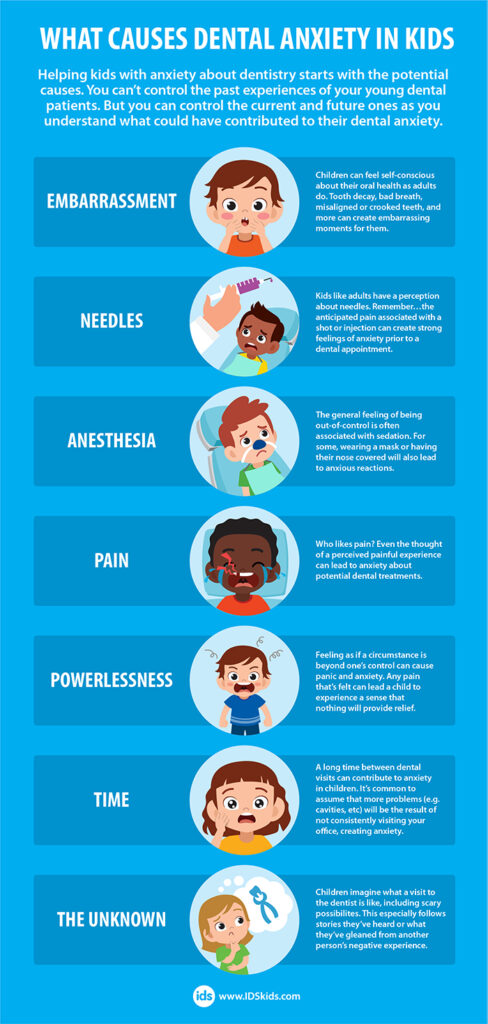
This handy chart shows the big anxieties that pediatric patients face when they visit the dentist.

GOALS FOR IMPROVING PEDIATRIC PATIENT EXPERIENCE IN MEDICAL CLINICS AND HOSPITALS
A positive medical experience in childhood lays the foundation for lifelong trust in healthcare. But for many children, hospitals and clinics are places of fear, anxiety, and sensory overload.
Creating a welcoming, child-centered environment in your medical facility isn’t just a bonus, it’s essential. At Imagination Design Studios (IDS), we specialize in turning cold, clinical spaces into comforting, immersive worlds that reduce stress and support healing.
The Challenge: Medical Anxiety in Young Patients
Pediatric patients often arrive with two main barriers to a successful appointment:
- Fear of the unknown – unfamiliar equipment, strangers, and procedures
- Emotional vulnerability – separation anxiety, sensory sensitivity, or past trauma
An environment designed with empathy and imagination can transform a child’s medical experience from overwhelming to empowering.
5 IDS-Backed Goals to Improve Pediatric Medical Experiences
1. Distract and Delight from the Moment They Arrive
First impressions start in the lobby, hallway, or elevator. Redirect anxiety by immersing kids in a world of color, play, and storytelling.
Strategies:
- Use murals, sculptures, and interactive play to shift focus away from fear
- Add visual storytelling with characters or local animals that guide them through the space
- Design spaces that invite curiosity instead of dread
IDS creates immersive waiting areas and corridors where children can spot forest friends, ocean animals, or outer space creatures, even before they reach the exam room.
2. Introduce Medical Concepts Through Play
Understanding reduces fear. Help children become familiar with medical tools and routines in a non-threatening, age-appropriate way.
Strategies:
- Sculptures or murals showing animals getting checkups, vaccines, or x-rays
- Hands-on elements that let children interact with mock equipment
- Quiet play corners that build confidence while they wait
IDS has designed themed exam pods with visual stories like a lion getting their blood pressure taken or a hippo getting their heartbeat checked—turning unknowns into approachable experiences.
3. Build Trust with Gentle Communication Tools
Use storytelling and visual prompts to support communication and cooperation.
Strategies:
- Create illustrated signage that explains what’s going to happen next
- Use wall graphics or ceiling murals to walk children through the “journey” of their appointment
- Encourage staff to use visual aids or character references when speaking to children
Many IDS clients use their custom murals as conversation starters—“Can you find the fox with the stethoscope?”—to help ease children into the clinical setting.
4. Design for the Whole Family Experience
The emotional comfort of caregivers is closely linked to the child’s sense of safety.
Strategies:
- Include family seating in exam rooms and waiting areas
- Use signage to guide and reassure parents about the next steps
- Design kid zones within adult areas so families stay connected but engaged
IDS can integrate themed zones, family seating, and tactile play into even small clinic footprints—ensuring every family member feels included and supported.
5. Reduce Sensory Overload and Promote Calm
Medical environments can be overwhelming. Thoughtful design helps soothe overstimulation and fear.
Strategies:
- Use calming color palettes and soft textures
- Incorporate sound-dampening materials
- Avoid harsh lighting; use warm, diffused light or nature-inspired fixtures
IDS uses real-world tested materials and design psychology to create sensory-sensitive environments that promote calm without sacrificing durability or hygiene.
Know What Causes a Bad Experience – and Design It Out
Before you can create a great experience, you need to understand what ruins one. In pediatric medical and dental settings, a bad experience often isn’t about what happened—it’s about how it felt.
Children may not remember the diagnosis or the procedure…
But they will remember if they were scared, ignored, overwhelmed, or confused.
Common Triggers of Negative Pediatric Experiences:
- Overstimulating spaces with loud noises, echoing hallways, or fluorescent lighting
- Cold, sterile environments with no visual warmth or personality
- Long waits with nothing engaging to do
- Unclear communication or clinical language that feels scary or confusing
- Unfamiliar tools introduced too quickly without explanation
- Lack of emotional connection with staff or caregivers
These stressors don’t just impact the child—they affect the parent’s perception, the quality of care delivered, and whether the family will return.
This Isn’t Just Decor, It’s Emotional Support
Every mural, character, or sculpted scene we create is rooted in one goal: making healthcare more human for kids. Whether it’s a playfully themed MRI room, a jungle-themed triage area, or a calming hallway between treatment zones, every space becomes part of the healing journey.
Check out this comprehensive resource to up your design game in your pediatric dental clinic: 5 Goals for Improving Patient Experience in Your Pediatric Dental Practice
As you know, a goal needs specific strategies. Keep in mind that the improvements you can make in your pediatric dental patient experience can also apply to a pediatric medical clinic.
The following resource is similarly aligned with that goal: 5 Ways to Improve Pediatric Patient Experience in Your Medical Clinic
CREATE THE ULTIMATE PATIENT EXPERIENCE THAT GIVES YOU A PERSONAL AND UNIQUE EDGE ON THE “COMPETITION”
Your overall “vibe,” culture, intentional design, marketing, and (if applicable) kid-centric theming form the foundation of patient experience. Each add up to an investment that will create strong returns.
Bottom-line: your patient experience leads to patient loyalty. A patients-for-life mindset drives positive engagement, referrals and revenue for your clinic.

